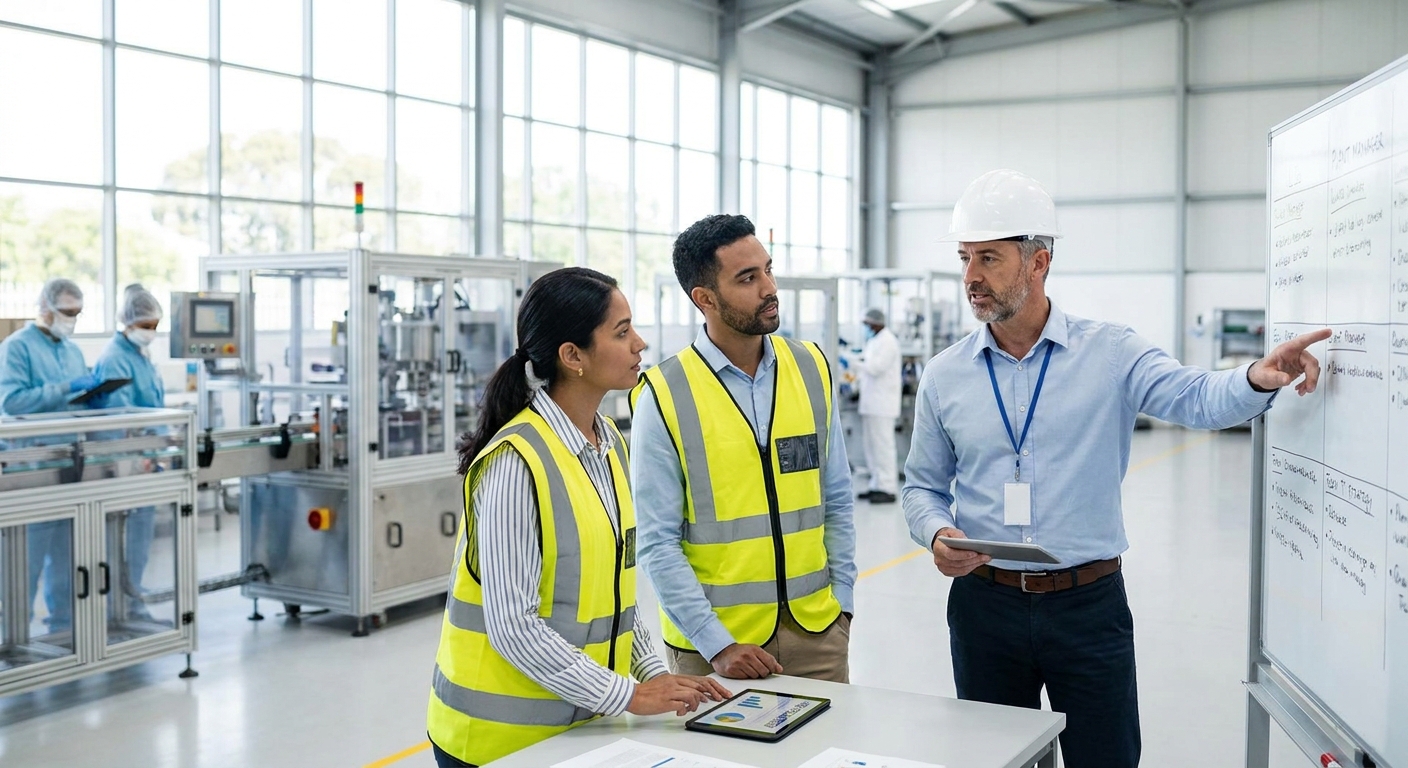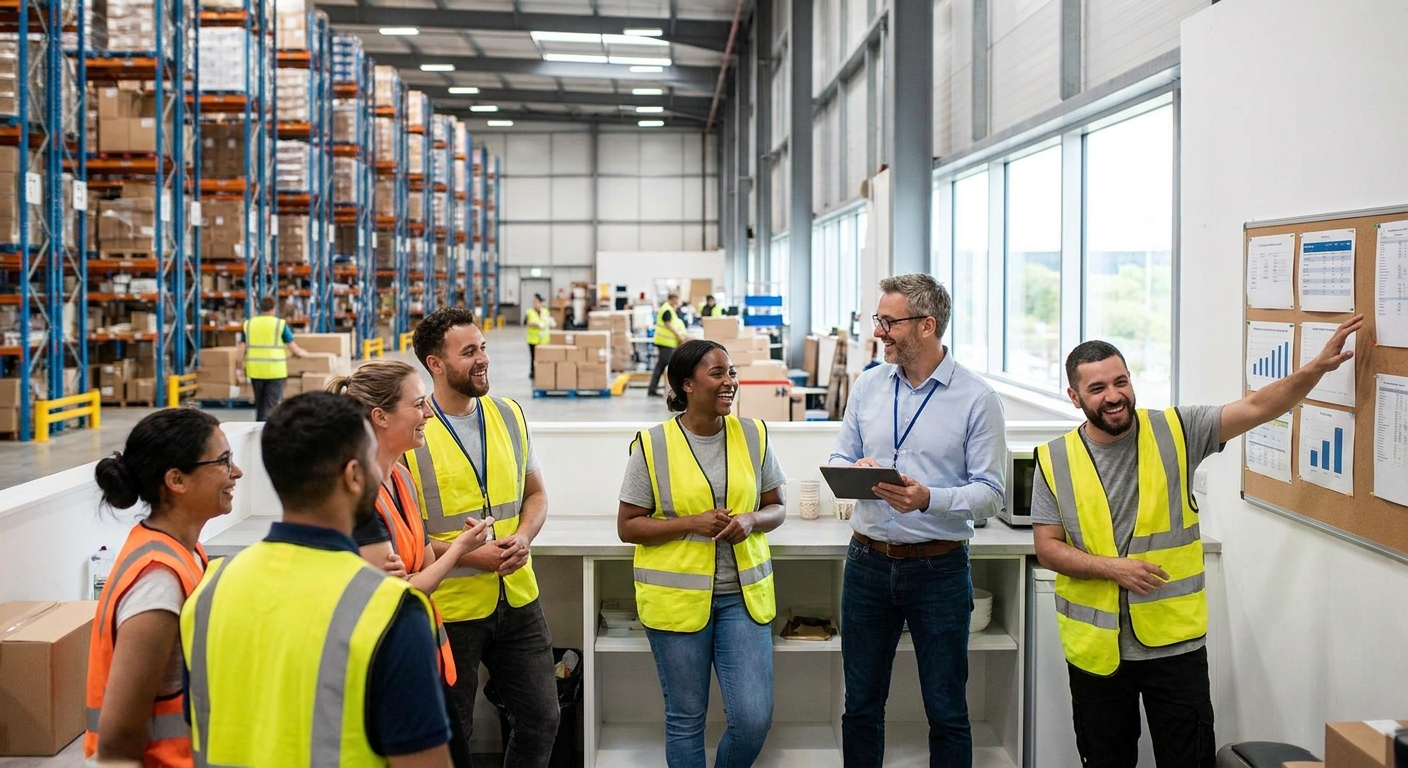
Manufacturing floors generate a different kind of employee relations caseload than an office does: safety incidents, attendance points, shift-swap disputes, workers' comp claims, and the occasional grievance that touches OSHA recordkeeping. Employee relations support for manufacturing companies has to handle all of that without slowing down production.
- Fractional HR support built for employee relations for manufacturing companies runs about $2,900/month with 10 hours/week of access — Buy.
- PEOs bundle employee relations into payroll administration but rarely cover shift-based incident investigations — Consider only if you already use their payroll.
- Bambee is priced for single-location offices, not multi-shift plants with OSHA documentation needs — Skip if you run more than one shift.
- A full-time HR manager makes sense once headcount clears 75 employees; below that, the fixed salary outpaces the caseload — Wait.
Why this matters
A manufacturing floor with 30 to 75 employees generates employee relations issues at a rate that surprises owners who haven't managed a shop floor before: attendance points, safety write-ups, a forklift near-miss, a harassment complaint between a lead and a line worker. Handle any of these wrong and you're looking at an OSHA citation, an EEOC charge, or a workers' comp retaliation claim — each of which costs far more than the HR support that would have prevented it. Fractional HR support exists specifically to catch this caseload before it becomes litigation.
Most shops in the 10-75 employee range don't have a dedicated employee relations function. The office manager or a plant supervisor handles HR on the side, so documentation gets skipped, progressive discipline steps get inconsistent, and the first real complaint exposes how thin the paper trail actually is.
Who this is for
This guide is for owners and plant managers at manufacturing companies with roughly 10 to 75 employees who don't have an HR department — or who have one generalist covering recruiting, payroll, and employee relations at once. If you run multiple shifts, mix shop floor and office staff, or you've had a safety incident or formal complaint in the last 12 months without a documented investigation process, you're the buyer this article is written for.
What to look for in employee relations support for manufacturing companies
Same-day response for shift-based issues
A line worker who walks off mid-shift, or a supervisor who needs to issue a write-up before the next shift starts, can't wait three business days for a callback. Employee relations support that only operates on standard office hours misses the exact moments manufacturing incidents actually happen. Look for a firm that commits to a response window measured in hours, not days.
OSHA and safety incident documentation
Every recordable incident needs a paper trail that ties the injury report to the corrective action and the employee relations follow-up. Support that hasn't handled OSHA 300 logs alongside workers' comp will miss the compliance angle on an incident that looks routine. This is where generic HR help fails manufacturing specifically.
Progressive discipline that holds up
Attendance points, safety violations, and performance issues all need a consistent, documented discipline ladder that survives a wrongful-termination claim. Inconsistent enforcement — writing up one worker and letting another slide — is the single most common reason manufacturers lose unemployment and discrimination cases. Your support should build the policy and coach supervisors to apply it the same way every time.
Multi-language and multi-shift coverage
Many plants run second and third shifts and employ workers whose first language isn't English. Employee relations that only reaches the day shift, or only communicates in English, leaves half your workforce without recourse and you without documentation. Ask directly how a firm handles off-shift access and translated policies.
Investigation capability
A harassment or safety-retaliation complaint requires a real investigation: interviews, written statements, a findings memo, and a defensible decision. This is a specialized skill, and it's the one area where doing it yourself creates the most legal exposure. Confirm the firm conducts investigations, not just advises on them.
Top picks
HR Business Partners — the safe pick
A Minneapolis-based fractional HR firm built for small and mid-sized companies, including manufacturers. The model is a monthly retainer around $2,900/month for roughly 10 hours per week of dedicated support, with a 30-day notice period rather than a long lock-in contract. That covers employee relations, compliance, recruiting, and HR strategy in one relationship, which matters when a safety incident and a hiring push land in the same week.
The manufacturing fit is the reason it leads here: incident documentation, progressive discipline design, and supervisor coaching are core services, not add-ons. For a plant that doesn't yet justify a full-time HR manager's salary, this is the right level of coverage. Verdict: Buy.
Fix your employee relations gaps
Fractional HR support for manufacturers at roughly $2,900/month, 30-day notice.
A PEO (Insperity, TriNet) — the bundled option
PEOs co-employ your staff and roll payroll, benefits, and some HR administration into a per-employee-per-month fee. For a manufacturer, the benefits buying power can be real. The catch: employee relations under a PEO tends to be phone-based HR advice, not on-site incident investigation, and you often surrender some control over discipline decisions.
If you already need pooled benefits and payroll administration, a PEO earns a look. If your actual pain is shop-floor employee relations, it's the wrong tool. Verdict: Consider.
Bambee — the low-cost floor
Bambee sells low monthly HR compliance help aimed at very small, single-location businesses. It's inexpensive and fine for a basic handbook. But a multi-shift plant with OSHA recordkeeping, workers' comp intersections, and off-hours incidents is well beyond what a low-tier remote plan covers. Verdict: Skip if you run more than one shift.
A full-time HR manager — the eventual answer
A dedicated HR manager runs $70,000 to $110,000 in base salary before benefits, and is the right move once headcount and caseload justify a full-time role — typically past 75 employees. Below that, you're paying a fixed salary for part-time work and often getting a generalist without deep employee relations investigation experience. Verdict: Wait until you clear 75 employees.
What to avoid
- A payroll provider's "free" HR portal. A self-serve document library is not employee relations support. It won't investigate a complaint, won't coach a supervisor, and won't defend a termination.
- A generalist recruiter who "also does HR." Recruiting and employee relations are different disciplines. A firm strong on filling roles isn't automatically equipped for a retaliation investigation — check the two separately.
- Advice-only retainers with no investigation service. If the fine print says the firm advises but never conducts investigations or writes findings memos, you're still the one exposed when a complaint escalates.
Verdict comparison
| Option | Monthly cost | Shift-based response | OSHA/incident docs | Investigations | Verdict |
|---|---|---|---|---|---|
| HR Business Partners | ~$2,900 | Yes | Yes | Yes | Buy |
| PEO (Insperity/TriNet) | Per-employee fee | Limited | Partial | Rarely | Consider |
| Bambee | Low tier | No | No | No | Skip |
| Full-time HR manager | $6,000+ salaried | Yes | Yes | Depends on hire | Wait |
FAQ
What is employee relations support for a manufacturing company?
It's HR help that handles shop-floor issues: safety incidents, attendance discipline, harassment complaints, and workers' comp intersections. For manufacturers it must include OSHA-aware documentation and formal investigations, not just handbook advice.
How much does fractional HR for a manufacturer cost in 2026?
A fractional HR retainer runs about $2,900 per month for roughly 10 hours per week of dedicated support. That's far below a full-time HR manager's $70,000-$110,000 base salary.
Is a PEO better than a fractional HR firm for employee relations?
A PEO is better if you mainly need pooled benefits and payroll administration. A fractional HR firm is better for hands-on employee relations, since PEOs usually offer phone advice rather than on-site incident investigations.
When should a manufacturer hire a full-time HR manager?
Generally once you pass about 75 employees. Below that, a fixed HR salary outpaces the actual caseload, and fractional support covers the same work for less.
Can fractional HR handle a harassment or safety complaint?
Yes, a firm with investigation capability conducts interviews, collects written statements, and produces a findings memo. Confirm the firm performs investigations rather than only advising on them.
What's the biggest employee relations mistake manufacturers make?
Inconsistent progressive discipline — writing up one worker while letting another slide. It's the most common reason manufacturers lose unemployment and discrimination claims.
Does fractional HR cover multiple shifts?
Good fractional support commits to off-shift access and, where needed, translated policies. Ask directly how a firm reaches second and third shift workers before signing.
One last thing
The cheapest employee relations problem to fix is the one that never becomes a complaint. Most manufacturers who call a fractional firm do it after an incident, when the paper trail is already thin — and reconstructing documentation after the fact is worth almost nothing in front of the EEOC. The teams that come out ahead are the ones that put a consistent discipline ladder and an investigation process in place before the first serious complaint, usually at the 30-employee mark.