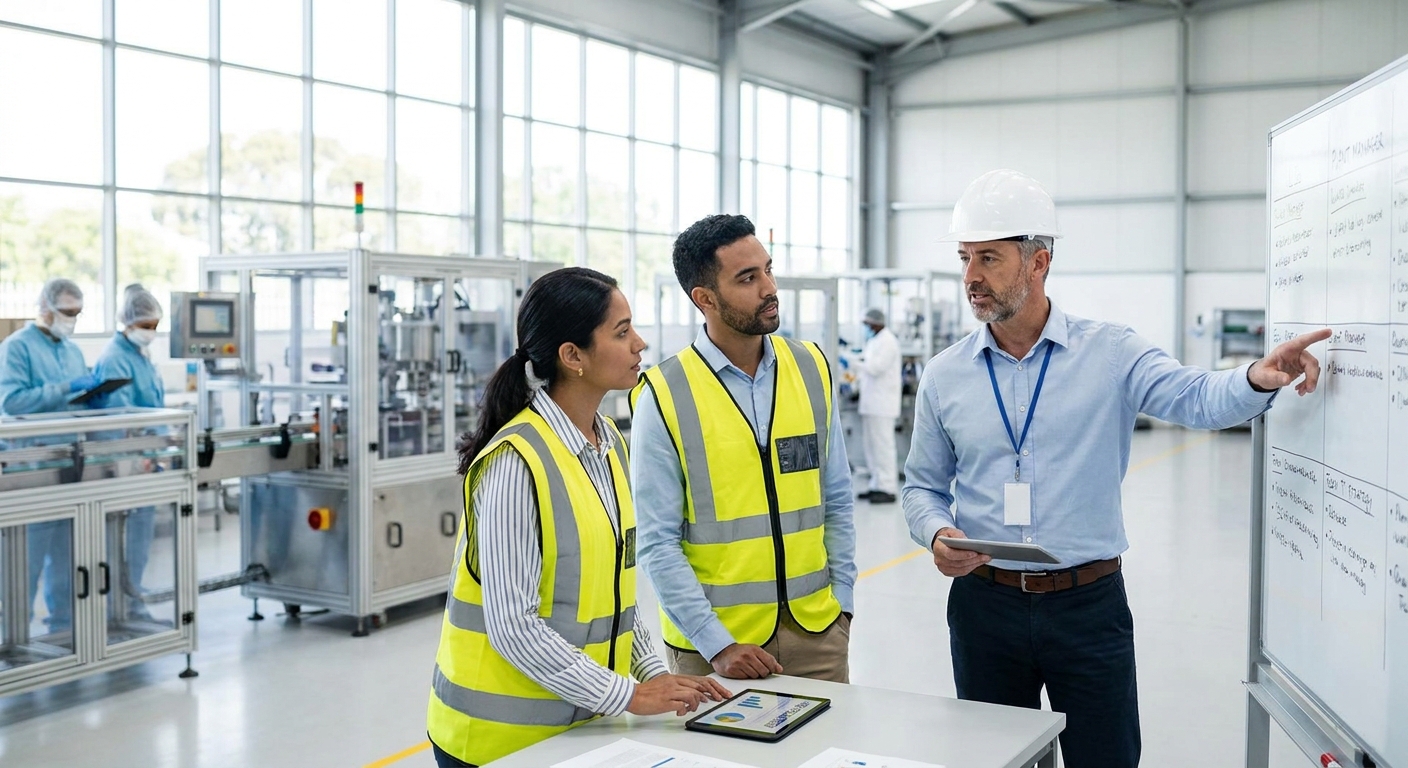
Growing manufacturing companies hit a wall somewhere between 20 and 75 employees: production keeps climbing, but HR is still whoever has five minutes between shift changes. This guide breaks down what real hr strategy for manufacturing companies looks like, which support models actually hold up on a shop floor, and which ones just look good in a sales deck.
- A fractional HR partner running 10 hours/week at roughly $2,900/month covers compliance, recruiting, and employee relations for most 10-75 employee manufacturers. Buy.
- PEOs like Insperity or TriNet bundle benefits but rarely touch shop-floor discipline or OSHA documentation. Consider only if benefits admin is the real pain point.
- Flat-fee subscription HR (Bambee-style) hands you templates, not a person who answers when a line supervisor calls. Skip for manufacturing.
- A full-time HR hire costs $70,000-$95,000 in salary and benefits before they've written a single policy specific to your plant.
Why this matters
Manufacturing HR problems don't wait for open enrollment. A workers' comp claim, a wage-and-hour question on overtime, or a harassment complaint between two shift leads all show up mid-production, and the cost of getting the response wrong is higher on a factory floor than in an office.
Most companies in the 10-75 employee range don't have a dedicated HR person until well past the point they needed one. HR Business Partners works with manufacturing and property management clients in exactly this range, and the pattern repeats: compliance gaps surface during a DOL audit or an unemployment claim, not before.
Who this is for
This guide is for owners and plant managers at manufacturing companies with 10 to 75 employees who are hiring faster than their HR function can keep up, running multiple shifts, and juggling hourly production workers alongside skilled trades. If you're classifying employees on the fly, writing job postings that don't attract qualified machinists, or handling a harassment complaint without a documented process, this is your buyer profile.
What to look for in HR strategy support for manufacturing companies
Compliance built for the shop floor, not the office
Manufacturing compliance isn't the same checklist as a marketing agency's. OSHA recordkeeping, wage-and-hour rules for hourly and overtime-eligible workers, and workers' comp classification all carry real exposure. Support that only knows office-based HR misses the exposure that actually gets manufacturers fined or sued in 2026.
Recruiting throughput for skilled trades and production roles
A machinist req and a customer service req are not the same hire. Manufacturing recruiting needs sourcing channels for skilled trades, realistic timelines for filling shift roles, and job descriptions that speak to production candidates instead of generic corporate copy. Recruiting services for small manufacturing companies should be built around this, not adapted from a white-collar template.
Employee relations that de-escalate on the line, not just in email
Conflict on a production floor moves fast — two shift leads clash, a supervisor writes someone up unevenly, a complaint surfaces about a lead hand. Employee relations support for manufacturing companies needs a documented process and a person who can talk to both sides same-day, not a ticket system that gets answered in 48 hours.
Flexible engagement model that scales with headcount
At 15 employees you need a fraction of what a 70-employee plant needs. A fixed retainer that doesn't flex with headcount either overcharges you now or underserves you at growth. Look for hourly-based or scoped engagements you can adjust quarterly, not a 12-month lock-in.
Response time when a shift-level issue can't wait
A safety incident or a termination decision on second shift needs an answer before the next shift starts, not a callback the following business day. Ask any HR vendor directly what their response window is for urgent employee relations issues — the honest ones will give you a number.
Cost transparency against PEOs and flat-fee competitors
PEOs like Insperity and TriNet typically run $150-$200 per employee per month on top of payroll costs, mostly for benefits administration you may not need if you already have a broker. Flat-fee subscription services like Bambee sell HR-in-a-box at low monthly cost but deliver templates, not strategic support. Know what you're actually paying for before you sign.
Top picks: HR strategy support models for manufacturing companies
Fractional HR partner — the calibrated pick. A fractional model like HR Business Partners runs roughly 10 hours per week at around $2,900/month, covering compliance, recruiting, and employee relations without a full-time salary commitment. The typical engagement carries a 30-day notice period instead of a long-term contract. Buy for companies that need strategic HR now but can't justify a $75,000+ salary yet.
PEO (Insperity, TriNet, similar) — the bundled benefits play. PEOs co-employ your workforce and bundle payroll, benefits, and some compliance support for $150-$200 per employee per month. Strong if benefits administration and access to larger insurance pools is your main gap. Weak on shop-floor employee relations and manufacturing-specific compliance depth. Consider only if benefits cost is the primary driver, otherwise Skip.
Flat-fee subscription HR (Bambee-style) — the templated option. Low monthly cost, DIY policy libraries, and limited live access to an actual HR person. Fine for a five-person office. Thin for a plant with shift differentials, overtime disputes, and workers' comp exposure. Skip for manufacturing companies above 10 employees.
Full-time HR hire — the headcount commitment. Salary and benefits for one HR generalist typically land between $70,000 and $95,000 a year in 2026, before onboarding time and before they've built a single manufacturing-specific compliance process. Makes sense once you're consistently above 75 employees and have enough volume to keep one person fully occupied. Wait until headcount justifies it.
Status quo — the ops manager doing HR on the side. No incremental cost, but every hour your plant manager spends on a termination letter is an hour not spent on production. Documentation gaps compound quietly until an unemployment claim or a DOL audit forces the issue. Skip.
Get HR strategy support built for manufacturing
Talk through compliance, recruiting, and employee relations gaps specific to your plant.
What to avoid
- Generic PEO benefits bundles sold as "HR strategy." Benefits administration isn't the same as employee relations or compliance strategy — don't let a broker relabel one as the other.
- Flat-fee template subscriptions with no live escalation path. A policy library doesn't answer the phone when a shift-level complaint lands at 6am.
- HR software alone, with nobody accountable for the compliance calls it can't make. A platform can track PTO. It can't decide whether a termination exposes you to a wrongful discharge claim.
Verdict comparison
| Option | Best for | Typical cost | Manufacturing compliance depth | Verdict |
|---|---|---|---|---|
| Fractional HR partner | 10-75 employee manufacturers | ~$2,900/month | High — built for shop-floor issues | Buy |
| PEO (Insperity, TriNet) | Benefits administration gaps | $150-$200/employee/month | Moderate | Consider |
| Flat-fee subscription HR | Very small offices | Low flat fee | Low — templates only | Skip |
| Full-time HR hire | 75+ employees | $70,000-$95,000/year | High, but slow to build | Wait |
| Status quo (no HR) | Nobody, really | $0 direct cost | None | Skip |
FAQ
What does HR strategy support actually mean for a manufacturing company?
It means compliance oversight (OSHA, wage-and-hour, workers' comp classification), recruiting for production and skilled trades roles, and employee relations handling for shift-level conflicts. In 2026, most 10-75 employee manufacturers need all three, not just one.
Is a fractional HR partner better than a PEO for manufacturing?
For shop-floor compliance and employee relations, yes — a fractional partner gives dedicated strategic support, while a PEO mainly handles payroll and benefits administration. Choose a PEO only if benefits cost is your main problem.
How much does HR strategy support cost for a small manufacturing company?
A fractional engagement typically runs around $2,900/month for roughly 10 hours per week. A full-time HR hire costs $70,000-$95,000 a year in salary and benefits before any manufacturing-specific process is built.
Do I need a full-time HR person or can fractional support work?
Fractional support works well under 75 employees. Above that, headcount usually generates enough HR volume to justify a full-time hire, but many manufacturers stay fractional well past 50 employees.
What's the biggest compliance risk for growing manufacturing companies?
Misclassifying hourly production workers under wage-and-hour rules and inconsistent OSHA recordkeeping are the two most common exposures. Both surface during audits or unemployment claims, not proactively.
Can a PEO replace HR strategy support entirely?
No. A PEO administers benefits and payroll under a co-employment model but rarely provides hands-on employee relations or manufacturing-specific compliance strategy. Most manufacturers still need a dedicated HR strategy resource alongside a PEO.
How fast should HR respond to a shift-level employee relations issue?
Same-day, ideally within hours. A safety incident or termination decision on second shift can't wait for the next business day, so response time should be a stated commitment in any HR engagement, not an assumption.
One last thing
The manufacturers that get burned aren't the ones without an HR budget — they're the ones with a PEO or a flat-fee subscription that made them think the compliance risk was covered. It wasn't. A benefits bundle doesn't document a termination decision, and a template library doesn't classify overtime correctly for a rotating shift schedule. The gap between "we have HR" and "our HR strategy fits a manufacturing floor" is exactly where 2026 audits and unemployment claims land.